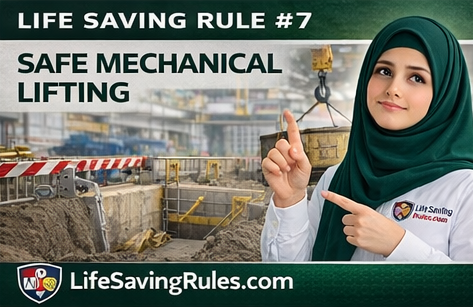

Moving heavy loads with cranes, hoists, or forklifts involves immense physical forces. If a rigging component fails or a load shifts, the consequences can be devastating for anyone standing nearby. Safe lifting requires a clear plan. Never exceed the rated load capacity of the lifting equipment, inspect all slings and rigging before use, and never position yourself or allow others to walk underneath a suspended load. Establish clear exclusion zones to keep personnel out of harm’s way.
Real-World Impact:
Bureau of Labor Statistics data indicates that hundreds of industrial workers are killed annually by being struck by falling objects or caught in crane/rigging failures. A well-documented incident in the construction sector involved a heavy steel beam slipping out of an improper nylon sling rigging configuration during a high crane lift. The beam crashed down into a poorly marked walkway below, killing a ground spotter.
Source: U.S. Bureau of Labor Statistics (BLS) / OSHA Accident Reports
Reflective Questions:
- Are our exclusion zones wide enough to protect people if a crane load were to snap and drop from its highest point?
- Do you know the exact weight of the load you are lifting before you rig it up?
