
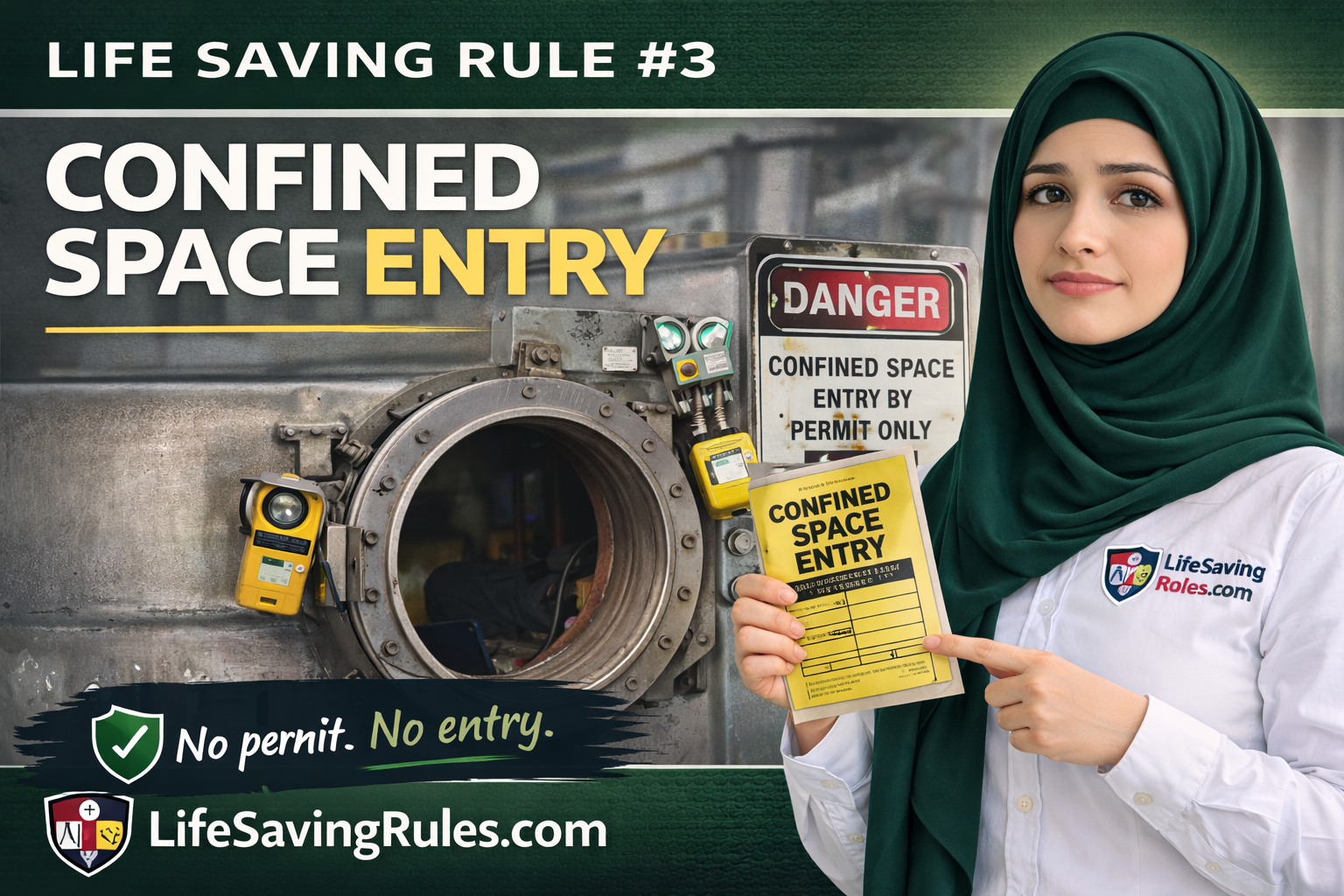

Confined spaces—like tanks, vessels, pipes, and excavations—are deceptive. They may look perfectly safe from the outside, but they can harbor invisible dangers like toxic gases, lack of oxygen, or physical engulfment risks. You must never enter a confined space unless you are fully trained, the atmosphere has been tested, and a formal entry permit is signed off. Most importantly, never go in alone; a dedicated, trained attendant must always be stationed outside to monitor the environment and initiate emergency rescue if things go wrong.
Real-World Impact:
OSHA investigated a tragic utility sector incident where three workers entered a standard underground manhole to perform routine work. The space had not been ventilated or purged, nor was the atmosphere tested with a gas detector prior to entry. All three utility workers succumbed to lethal levels of invisible hydrogen sulfide and carbon monoxide trapped inside the space.
Source: U.S. Occupational Safety and Health Administration (OSHA) Case Files
Reflective Questions:
Is our gas detection equipment calibrated, tested, and actively used before every single entry?
If a coworker collapsed inside a tank, would you know how to execute a safe rescue without entering the space yourself? (Remember: Over 60% of confined space fatalities are would-be rescuers).
