
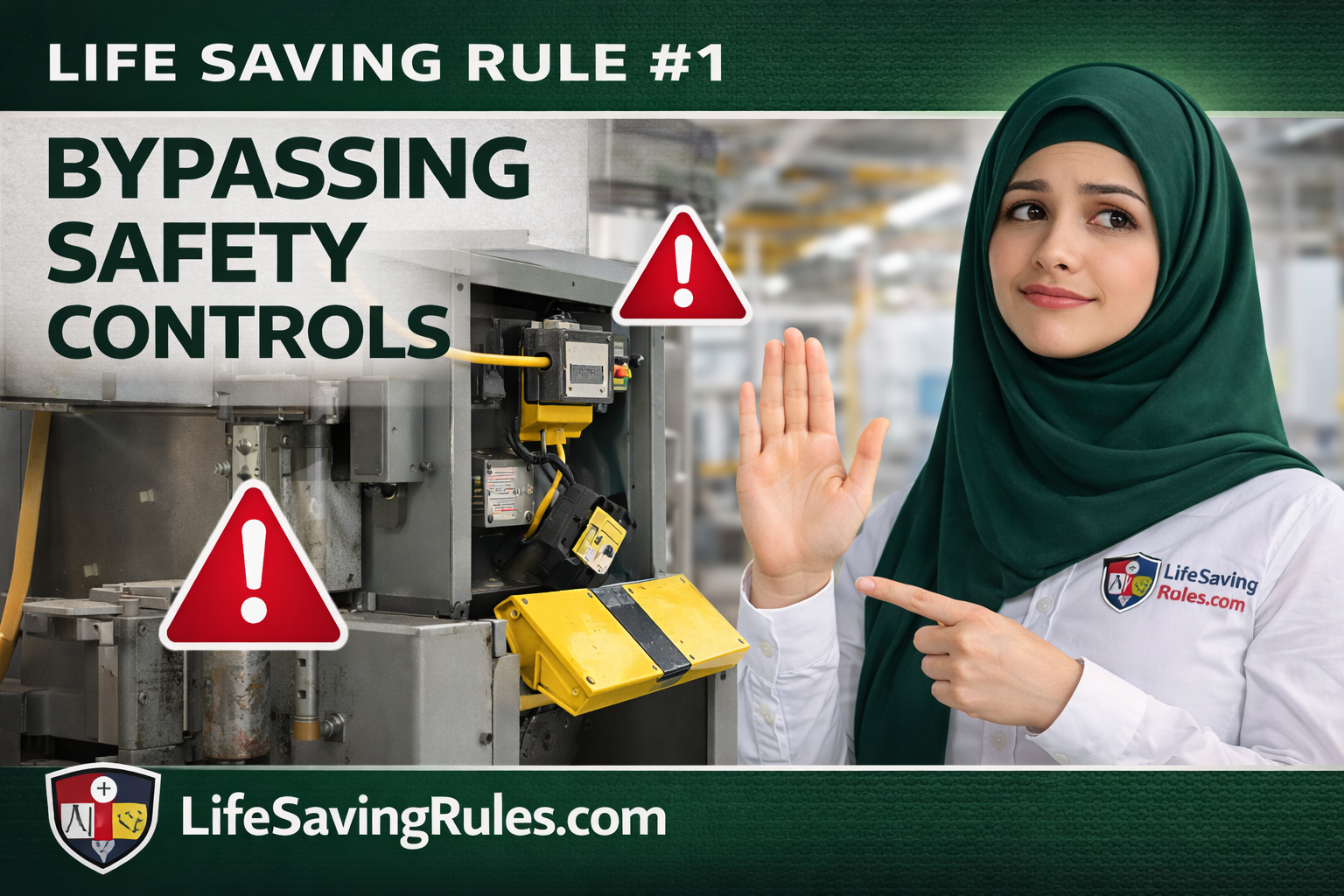

In the rush to maintain production or beat a deadline, it can be tempting to bypass a safety interlock, ignore a warning alarm, or temporarily disable a sensor. But safety controls aren’t hurdles designed to slow you down—they are the final barrier between a normal workday and a catastrophic event. Bypassing a safety control means operating blindly without a safety net. Before you alter, modify, or disable any protective device, you must obtain formal authorization. If a control isn’t working correctly, stop the job and report it. True efficiency never requires sacrificing protection.
Real-World Impact:
In an incident analyzed by the international oil and gas sector, an operator repeatedly opened a high-pressure gas pipeline pig receiver station to check for a transit device because the automated signaling equipment was considered unreliable. Without verifying proper isolation and bypassing standard safety checks, the high-pressure system suffered a catastrophic overpressure blowout. The resulting blast propelled the worker overboard, resulting in a fatality.
Source: BP / International Association of Oil & Gas Producers (IOGP) Safety Case Studies
Reflective Questions:
Do you feel comfortable stopping a task if you notice a critical safety control has been altered or disabled by someone else?
Are there any alarms or safety interlocks on our site that are frequently bypassed because they are “annoying” or glitchy?
